

About the journal
A refereed journal of undergraduate economics, run by students and refereed by academics.
Scope
Long, evidence-based economic writing by students: papers of 4,000 to 6,000 words with a defensible empirical or analytical basis, answering a question the author framed. Work that began as coursework or a dissertation is eligible; work published or under consideration elsewhere is not.
Causal language is used only where identification supports it. Where an argument rests on data and code, both are published with the paper.
Review
Two external referees read every paper that passes the desk, working to a fixed report form. No decision after review rests on one report. Handling is anonymous in both directions.
- 1Screeninganonymised by Operations within five working days of receipt
- 2Desk decisionSection Head, within two weeks; a desk rejection is co-signed by the cluster Deputy
- 3Two refereesreports due 21 days after acceptance
- 4RecommendationSection Head, second-read by the cluster Deputy
- 5DecisionChief Editor, within eight weeks of receipt
- 6Revision14 days minor, 28 days major; one round of major revision
- 7Data and code checkevery accepted empirical paper is reproduced before production
- 8Publicationin the next issue whose cut-off the paper meets
Authors may appeal a rejection on procedural error, a demonstrable misreading, or an undeclared conflict. See Policies.
Sections
Seven sections in three clusters, each cluster led by a Deputy Editor.
- 1Applied Micro, Development and Labour
- 2Political Economy and Public Policy
- 3Macroeconomics
- 4Finance and Financial Markets
- 5Econometrics and Data Sciencewith the methods and data desk, which serves every section
- 6Trade, Law and Institutions
- 7Energy, Environment and Digital Infrastructure
Governance
The journal is run by its members under a written constitution adopted by its founding Board. The Board decides policy and reserved matters; an Executive runs the journal week to week; editorial, administrative and external lines do the work. No university, department, society, funder, sponsor or adviser has any right of review or veto over editorial content.
Editorial board and team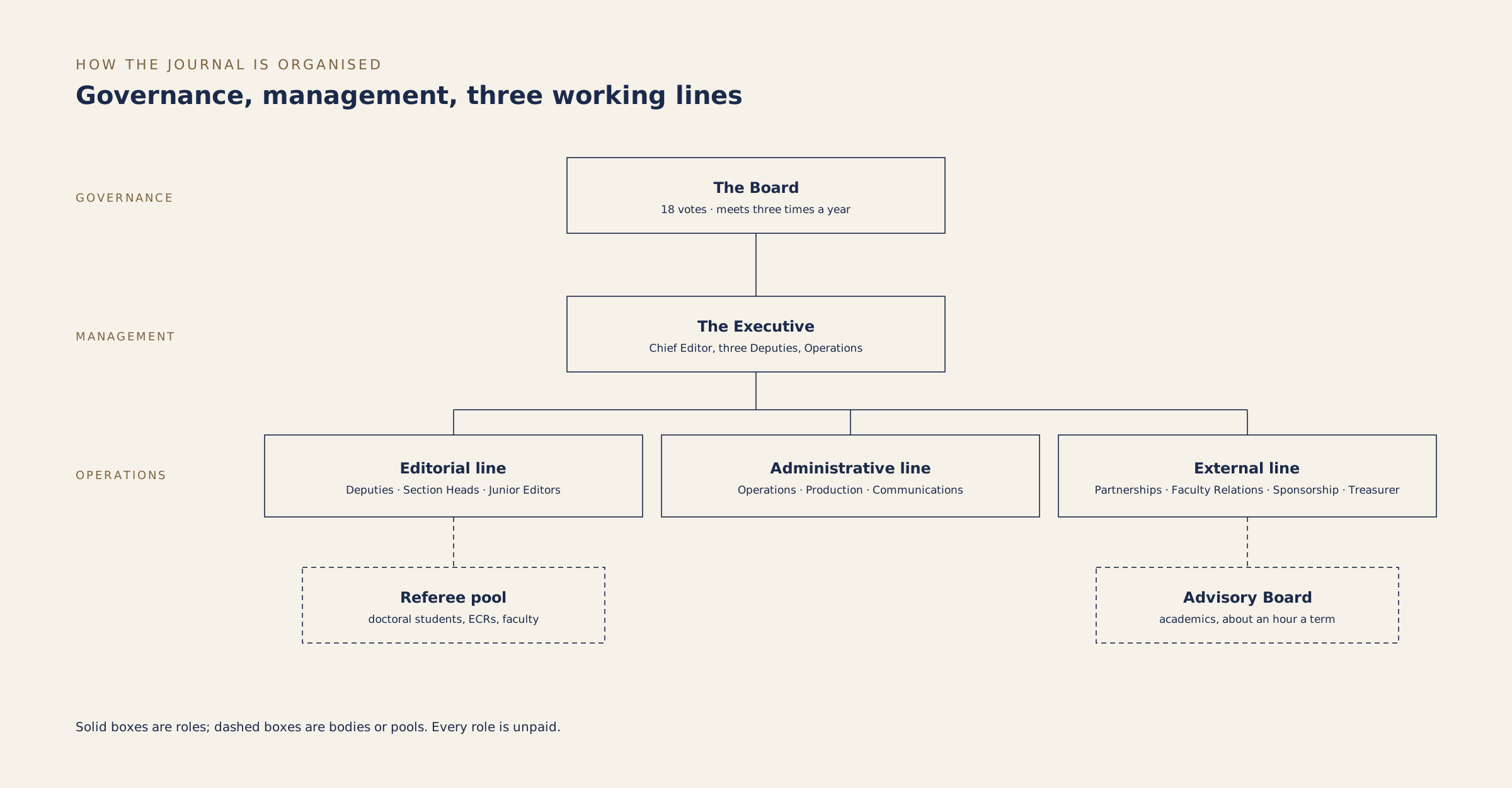
Questions
Who can submit?
Undergraduate students at any university, and graduates within twelve months for work done as a student. Every co-author must be eligible.
Is review anonymous?
In both directions. Operations holds author identities; editors and referees work from a paper ID.
May I use AI tools?
Language editing and coding help, with disclosure. Text, analysis or results generated by a tool and presented as your own are not accepted.
How long does a decision take?
Eight weeks from receipt.