

Academic Advisory Board
Advisers
All senior advisers serve in a personal capacity and do not represent their affiliated institutions or organisations.
-
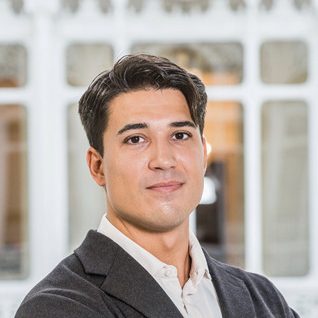
Jorge Abad
Bio
Jorge Abad is a Senior Economist in the Financial Research Division of the European Central Bank’s Directorate General Research. His research covers banking regulation and macro-finance, including the procyclicality of expected credit loss provisions, central bank digital currencies, the operational framework of monetary policy, and the links between EU banks and the shadow banking system. Before joining the ECB, he spent almost six years at the Banco de España as a Senior Research Economist. He worked first in the Macro-Financial Analysis and Monetary Policy Department (2020–2025) and then in the Financial Stability and Macroprudential Policy Department (2025–2026). In 2018, he was a PhD intern in the Bank of England’s Financial Stability Strategy and Risk Directorate. He holds a PhD from CEMFI in Madrid.
-
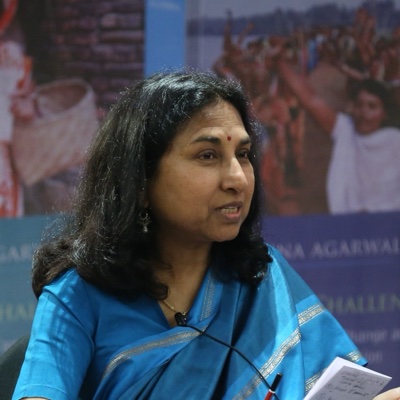
Bina Agarwal
Bio
Bina Agarwal is Professor of Development Economics and Environment at GDI, University of Manchester. She has been Director, Institute of Economic Growth, Delhi; President, International Society for Ecological Economics; Vice President, International Economic Association; and visiting professor at Harvard, Cambridge, Michigan and NYU School of Law. Agarwal’s research covers agrarian change, environmental governance, land & property rights, law, & gender inequalities. Her notable books include the award-winning, A Field of One’s Own (1994); Gender and Green Governance (2010); and Gender Challenges (2016), a three-volume compendium of her selected papers. Her work on women’s land rights and on environmental governance has had global impact. In 2005 she led a successful civil society campaign to make India’s Hindu Inheritance law gender equal. Agarwal’s many awards include three book prizes; Leontief Prize; Louis Malassis Prize for agricultural economics; International Balzan Prize for gender studies; Kenneth Boulding award for Ecological Economics; and the 2024 Global Inequality Research Award. See also: www.binaagarwal.com
-
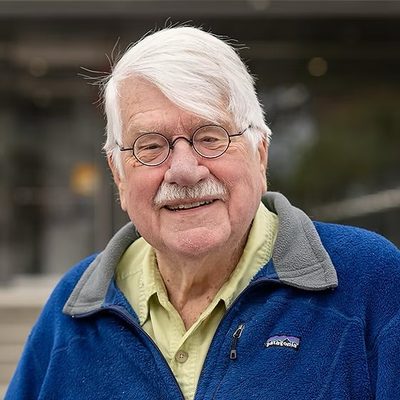
Orley Ashenfelter
Bio
Orley Ashenfelter is the Joseph Douglas Green 1895 Professor of Economics, Emeritus, at Princeton University. He is known for seminal research in labour economics, econometrics, and law and economics, and he is a leading figure in wine economics. He was elected to the American Philosophical Society, has been named a Distinguished Fellow of the American Economic Association, and has been a Guggenheim Fellow. His awards include the Frisch Medal (1982), the IZA Prize in Labor Economics (2003), and the Jacob Mincer Award (2005). He has served as President of the American Economic Association and directed the US Department of Labor’s Office of Evaluation. His doctoral students include David Card, Joshua Angrist, Janet Currie, and Henry Farber. He moved to emeritus status in July 2024 after more than fifty years at Princeton.
-
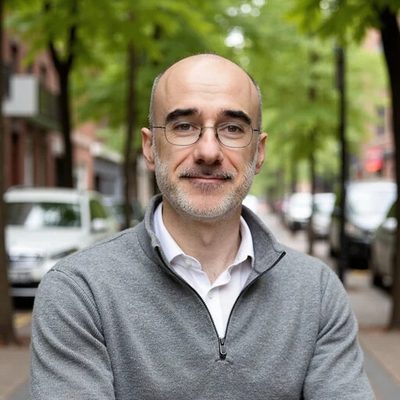
José Cuesta
Bio
José Cuesta is a Lead Economist at the World Bank, Professor in Practice in the Department of Economics at SOAS, and Adjunct Professor at Georgetown University. He is a development economist whose work connects academic research with international policy practice on poverty, inequality, social protection, conflict, gender, and distributive policy. He co-directed the World Bank’s Poverty and Shared Prosperity 2016: Taking on Inequality and UNICEF’s Report Card 2018: An Unfair Start, and he has advised governments in more than 30 countries. He previously served as Chief of Social and Economic Policy at the UNICEF Office of Research in Florence, Senior Research Economist at the Inter-American Development Bank, and Economist at UNDP in Honduras. He holds a PhD in economics from Oxford.
-
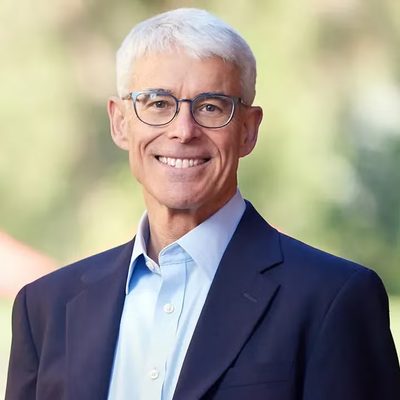
Darrell Duffie
Bio
Darrell Duffie is the Adams Distinguished Professor of Management and Professor of Finance, Emeritus, at Stanford Graduate School of Business, and professor by courtesy in Stanford’s Department of Economics. His books include Dynamic Asset Pricing Theory and, with Kenneth Singleton, Credit Risk. His recent work focuses on payments, stablecoins, and the US Treasury market, and includes his 2026 Jackson Hole Symposium paper, “Tokenized Finance and the Perimeter of Central Banking.” He is a Fellow of the Econometric Society, on whose Council he served from 2009 to 2012, and a Fellow of the American Academy of Arts and Sciences. He was President of the American Finance Association in 2009. From 2008 to 2018, he sat on the board of Moody’s Corporation. From 2013 to 2017, he chaired the Financial Stability Board’s Market Participants Group on Reference Rate Reform, and in 2026 he was an expert advisor on tokenisation for the IMF’s Global Financial Stability Report. He has been on the Stanford finance faculty since completing his PhD at Stanford in 1984.
-
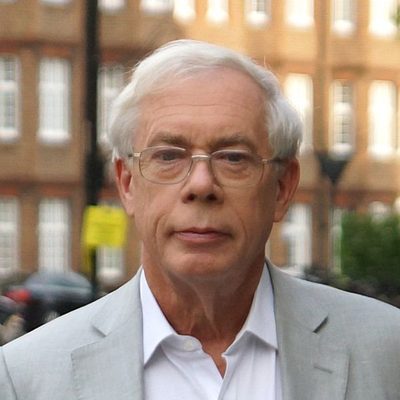
Sir John Kay
Bio
Sir John Kay is an economist whose career spans academia, business and finance, and public affairs. He has been a Fellow of St John’s College, Oxford, since 1970. His books include The Truth about Markets, Obliquity, Other People’s Money, Radical Uncertainty (with Mervyn King), Greed is Dead (with Paul Collier), and, most recently, The Corporation in the 21st Century (2024). He is a Fellow of the British Academy and the Royal Society of Edinburgh, and his Financial Times columns won the Senior Wincott Award for Financial Journalism. As research director and then director of the Institute for Fiscal Studies, he established it as one of Britain’s most respected think tanks. In 1986 he founded London Economics, which grew into Britain’s largest independent economic consultancy, and he chaired the UK government’s review of equity markets and long-term decision-making. He was the first director of Oxford’s Saïd Business School and has held chairs at London Business School, the University of Oxford, and the LSE.
-
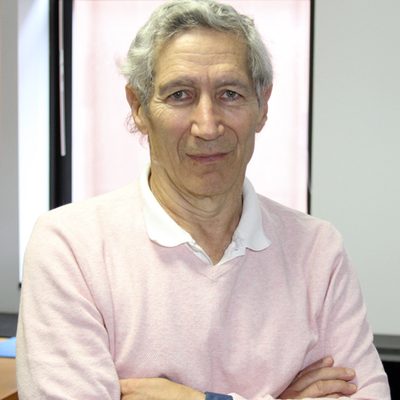
Ariel Pakes
Bio
Ariel Pakes is the Thomas Professor of Economics at Harvard University, specialising in econometrics and industrial organisation. He is known for the Berry–Levinsohn–Pakes (BLP) approach to demand estimation and the Olley–Pakes approach to estimating production functions, and his methods are widely used by government agencies and private firms. He was elected to the National Academy of Sciences in 2017, named a Distinguished Fellow of the American Economic Association in 2019, and named a Web of Science citation laureate in 2020. He received the Frisch Medal of the Econometric Society in 1988, the BBVA Foundation Frontiers of Knowledge Award in 2018, and the Erwin Plein Nemmers Prize in 2022. He has mentored more than seventy doctoral students. Before joining Harvard in 1999, he was the Charles and Dorothea Dilley Professor of Economics at Yale.
-
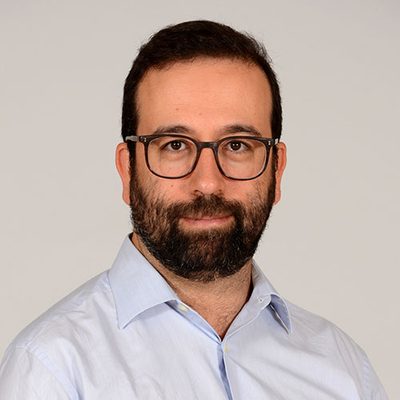
Ricardo Reis
Bio
Ricardo Reis is the A.W. Phillips Professor of Economics at the London School of Economics, where he directs the Centre for Macroeconomics. He has published widely on monetary and fiscal policy, inflation, and business cycles. He is a Fellow of the British Academy, the Academia de Ciências de Lisboa, and the Econometric Society. His honours include the 2022 Carl Menger Prize, the 2021 Yrjö Jahnsson Medal, the 2017 Banque de France/TSE junior prize, and the 2016 Bernácer Prize. He is an academic consultant to the Bank of England, the Riksbank, the Federal Reserve Bank of Richmond, and the European Stability Mechanism. He received his PhD from Harvard and previously held faculty posts at Columbia and Princeton.
-
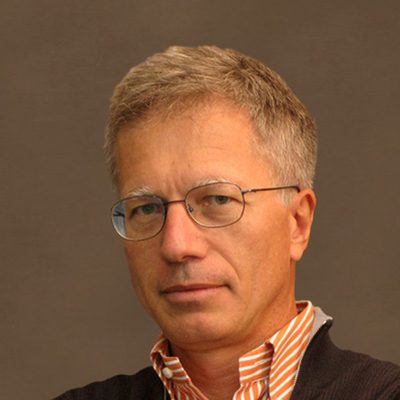
Guido Tabellini
Bio
Guido Tabellini is Distinguished Professor at Università Bocconi, where he held a chair between 1994 and 2026, served as Rector from 2008 to 2012 and as Vice-President from 2022 to 2026. His research spans political economics and public choice, macroeconomics, and international economics. He is a fellow of the Econometric Society, a foreign honorary member of the American Academy of Arts and Sciences, and a foreign honorary fellow of the American Economic Association. He received the Yrjö Jahnsson Award and, in 2022, the BBVA Foundation Frontiers of Knowledge Award. He has served as President of the European Economic Association and was President of the Econometric Society in 2022. He earned his PhD at UCLA and taught at Stanford and UCLA before returning to Europe.